

By Anissa Gabbara | Art by Nate Bynum feat. Gemini
New year, new resolutions—and every intention of keeping them beyond Quitters Day. According to surveys, about 45% of these resolutions revolve around health. And while maintaining your health goals throughout the year can be challenging, there are simple, realistic steps you can take to stay on track. Here, U‑M experts share tips on the little things you can do to have a great year.
1. Move, move, move
Daily physical activity is key to your overall health, lowering heart disease, improving cognition, boosting mental health, and more. And even short bouts of exercise can be beneficial, according to Laura Richardson, clinical associate professor in the University of Michigan School of Kinesiology, who suggests prioritizing consistency over intensity if you’re a stark beginner. As Richardson noted, mini movement breaks or “exercise snacks” like taking the stairs instead of the elevator, parking your car farther away, going on a lunchtime walk, or sneaking in little bits of aerobic activity or strength training can help build stamina. Make use of U‑M’s walkable campus and Ann Arbor’s abundant parks and hiking trails between classes and work. Kinesiology offers a wide range of classes (swimming, tennis, pickleball, and more) to help you stay active. Additionally, MHealthy offers a variety of health and well-being programs and services to faculty and staff.
“Throw away the negative myths that you have to be running a race or a marathon or lifting heavy weights to be successful,” Richardson said. “Our body’s going to adapt to the movement quicker than we think, so doing something is always better than doing nothing, and there’s no better time than the start of the new year.”
2. Eat well
Maintaining a well-balanced diet throughout the year is crucial to a healthy lifestyle. But for many, the new year is a time to reset regular eating behaviors. Dave Bridges, associate professor of nutritional sciences in U‑M’s School of Public Health, believes that any behavior change must be taken in small, appreciable, goal-oriented steps. This could look like adding one or more vegetables to your lunch or going for a 10-minute walk after a meal, Bridges said. Additionally, it’s not uncommon for eating habits to change during the hectic holiday season, so don’t be too hard on yourself as you get back into routine.
“Just be aware that over the holidays, things are going to be a little bit different, and that feeds into this feeling that after the holidays, you have to make this massive lifestyle change as a New Year’s resolution, which is almost sometimes an unachievable goal,” Bridges said. “I think moderation through the holidays and then moderate behavior changes after the holidays is a good mix.”
3. Stay connected
Loneliness isn’t uncommon during the holiday season. But Addie Weaver, associate professor of social work and associate director of doctoral programs in U‑M’s School of Social Work, stresses the importance of social connectedness year round.
“When we are connected with others, when we’re sharing experiences with others, it really does positively impact our mental health, as well as our stress and loneliness, in part because we’re able to share joy,” Weaver said. “Being in that community gives us a sense of belonging that we know is really important for our mental well-being.”
Weaver emphasized how small acts can make a big difference, whether it’s reconnecting with people you haven’t seen in a while, volunteering in your community, or joining student organizations on campus. But she encourages people to think about the quality of their social connections, making sure they are able to be fully present when socializing with others and they prioritize relationships that align with what’s important to them. And remember, you’re not alone. As Weaver advised, have some self-compassion and know that a lot of folks are struggling with loneliness and social isolation, even if it seems like they’re doing well.
4. Discover the arts
As Mark Clague (AB ’90, BMus ’90), professor of music in U‑M’s School of Music, Theatre & Dance and executive director of the U‑M Arts Initiative Affiliation Alumni, pointed out, the arts can serve a much greater purpose than what we might think.
“I think a lot of times, we think of the arts as a decorative thing, as sort of maybe a distraction from our day-to-day life. But one of the things we’re learning more and more from health research is actually how vital the arts are to our well-being, and that’s spiritual well-being, social well-being, and I would say physical well-being,” Clague said.
For Clague, participating in the arts is twofold: making something and doing something. And luckily, there’s no shortage of arts-related activities on U‑M’s campus and around Ann Arbor. Get crafty and attend an Arts Initiative workshop. Find what Clague calls an “arts buddy” and experience a University Musical Society concert at Hill Auditorium. Explore the University of Michigan Museum of Art. Enjoy a night on the town at one of Ann Arbor’s many music venues. And with over 250 arts student organizations at U‑M, creative Wolverines can connect with like-minded peers.
5. Find your purpose
Realizing your purpose in life can do wonders for your well-being. Stephanie Preston, professor of psychology in U‑M’s College of Literature, Science, and the Arts, suggests identifying your core values first. The problem comes when we lose sight of those values, Preston stressed, causing us to engage in activities that can make us less happy (e.g., shopping, inactivity, scrolling, etc.).
“We need occasional reminders of our true hopes for life,” Preston said. “Don’t get hung up on perfecting these goals. People rarely have a singular, unmistakable purpose. Over time, your overarching purpose takes shape, but it’s difficult to figure that out in advance. Just do the best you can, for the moment, and give yourself grace to revisit and change as needed.”
At U‑M, the Faculty and Staff Counseling and Consultation Office can offer life and career guidance, as well as therapy to help you establish and implement a plan. Students can seek support through the Opportunity Hub and University Career Center.
Philanthropy’s role
Donors help ensure the U‑M community has what it needs to maintain a healthy lifestyle all year. Thanks to philanthropic support, resources like University Health Service and the Maize and Blue Cupboard, for example, keep students, faculty, and staff thriving in their wellness journey. Donors have also generously supported numerous arts student organizations across campus, funded the development of resources geared toward learning critical thinking skills to help with life and career guidance, and more.
Related Funds
.jpg)

.jpg)
Related Stories



Tags
Related Funds
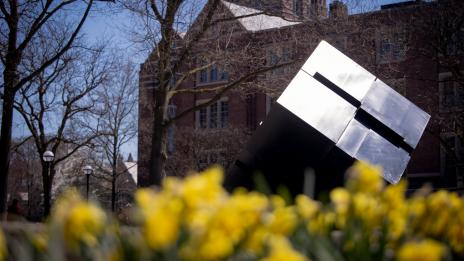
University Musical Society - Gifts - 915007
Expanding Access and Inclusiveness. Providing Engaged Learning through the Arts. Continuing our Bold Artistic Leadership.
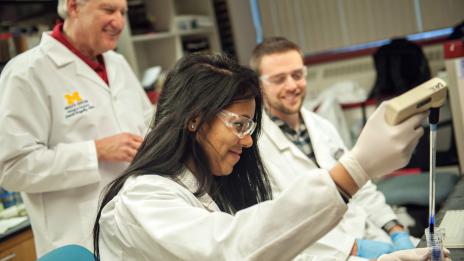
Student Wellness Fund - 332523
Promoting well-being via resources, education, and coaching to help students manage stress and nurture their purpose in m
University Health Service - Gifts - 363194
UHS provides both comprehensive outpatient clinical services as well as health and wellness programs. Gifts to UHS provid

Well-being and Health Fund - 394558
Gifts to this fund will support programs and services within the Division of Student Life that promote student health, we

LSA Fund for Student Well-being - 341075
Supports the physical, mental, and emotional health and well-being of LSA students so they can thrive on campus. Gifts
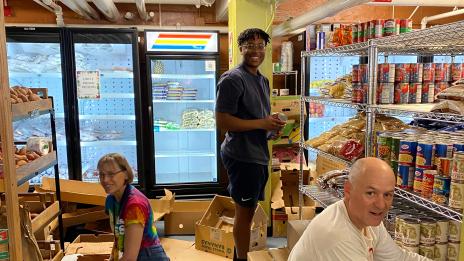
Maize & Blue Cupboard Fund - 333660
The Maize & Blue Cupboard supports Ann Arbor students experiencing food insecurity by providing access to nutritious food
Related Stories

Checking in: Fostering student mental health and well-being on campus
U‑M health leader Dr. Lindsey Mortenson discusses what the university is doing to promote student well-being and how p

6 tips to beat the winter blues
U‑M expert shares ways to deal with the doldrums.
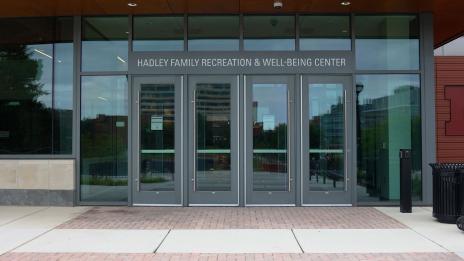
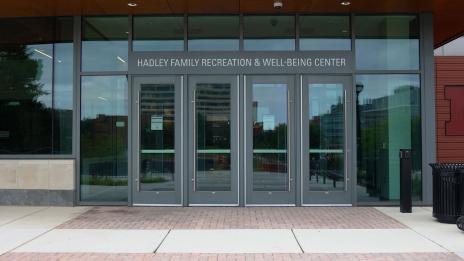
Working toward wellness at the new Hadley Center
The largest recreational facility on campus opened its doors this fall, fostering health, well-being, and community.

Turning research into action
A Q&A with new Michigan Public Health dean Charles Holmes on AI, global health, and the power of philanthropy.