
By Madeline Swanson | Art by Nate Bynum feat. Gemini | Read time: 10 min, 34 sec
Scholarships can be the difference between a dream deferred and a degree earned—especially for first-generation students, who often arrive on campus carrying both ambition and uncertainty.
For many first-gen students at the University of Michigan—who are the first in their immediate family to pursue higher education—obstacles can start long before move-in day: navigating applications without a “road map,” deciphering financial aid packages, balancing work and coursework, and managing the quiet pressure of being the first member of the family to pursue higher education. Some students say they feel isolated when peers can call home for quick advice about office hours, course loads, or bills, while they’re learning it all in real time. Others shoulder financial stress that can overshadow the very experiences that make college transformative: joining clubs; taking unpaid, career-building roles; studying abroad; grabbing coffee with classmates, and more.
Philanthropic support can be a vital resource for first-gen students. For many, it doesn’t just close a financial gap—it creates breathing room, opening doors to mentors, communities, and opportunities that help them make the most of their college experience.
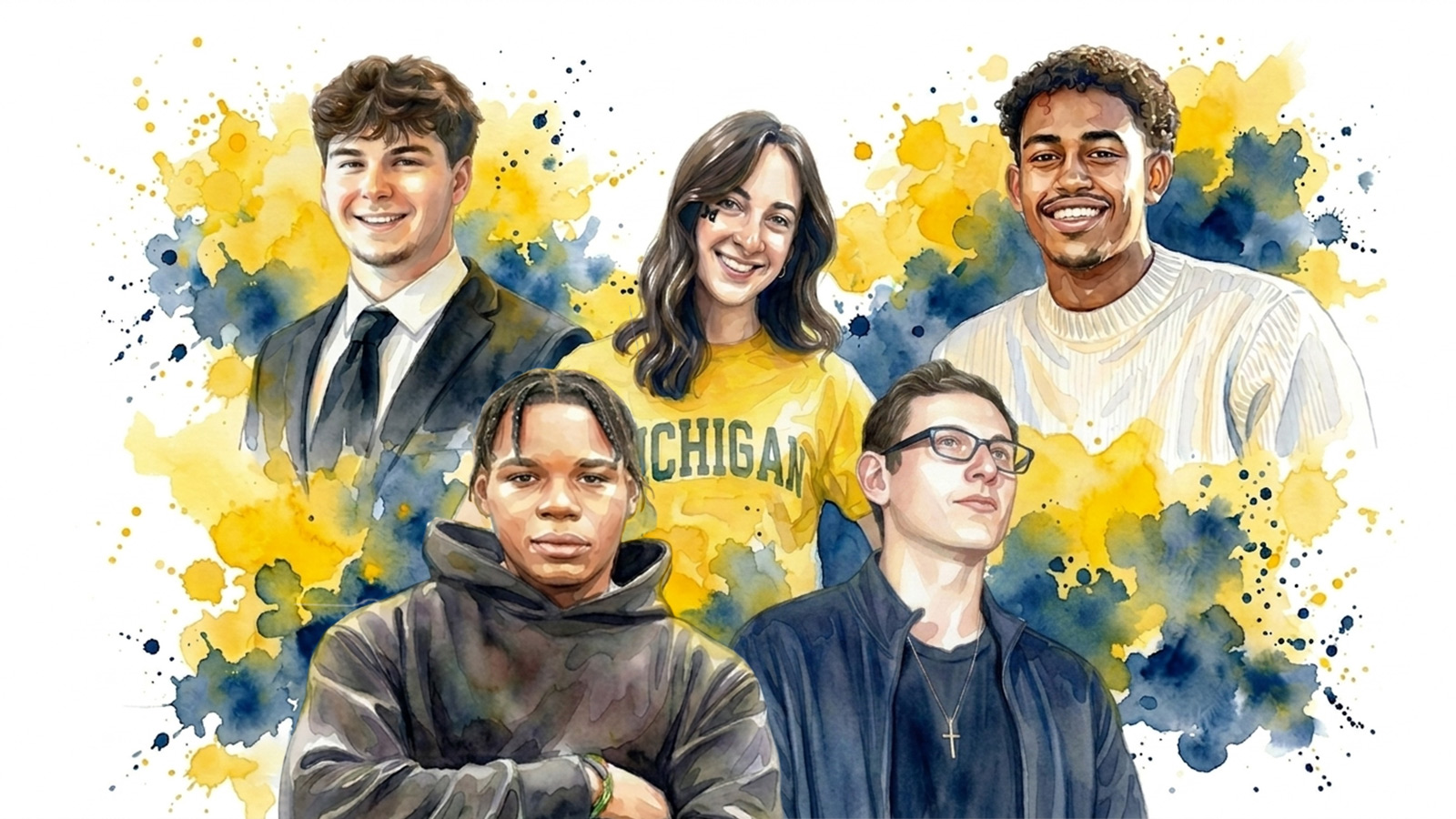
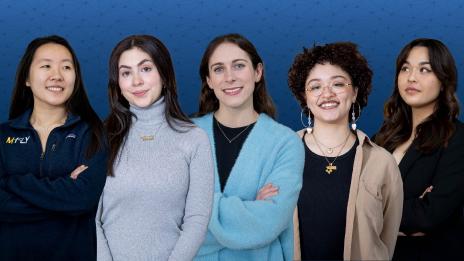
That support system, however, can look different for each individual. Leaders & Best spoke with five first-gen students about the impact their scholarships are having on their Michigan experience.
Stacie Young: When I opened my acceptance into the Kessler Scholars Program [I was] ecstatic.
Stacie Young is a rising sophomore at the College of Literature, Science, and the Arts. Growing up in Fowlerville, Michigan, she was a top graduate in her high school class. She applied to several public universities in the state of Michigan, waiting for the moment that would make the choice clear: the cost.
Then she saw an email from LSA and remembers it to this day.
“When I opened it, it was my acceptance into the Kessler Scholars Program,” Young said. “I remember the first thing I did was call my best friend and told her I just got this crazy scholarship to U‑M, and we were ecstatic.”
The Kessler Scholars Program, founded at U‑M by the Judy and Fred Wilpon Family Foundation, provides four years of comprehensive support for students who are among the first in their families to attend college.
Young, a recipient of multiple scholarships, said the transition has been marked by the challenges many first-gen students know well: learning the logistics of college life without parents who have lived it.
“I was the first person in my family to move out at 18 and go to a big, four-year university,” she said. “I really was like, ‘I don’t know how to do any of this.’”
So when a financial shortfall threatened to derail her second semester, she reached out to the leadership team at the Kessler Scholars Program—an email she described as a “last-ditch effort.”
“I remember sitting in the [Michigan] Union … looking at my bill and panicking because I couldn’t figure out how to pay for the rest of my tuition,” Young said. “I remember thinking ‘I’m going to have to drop out.’”
Responding swiftly, leadership at the Kessler Scholars Program quickly worked with Young to help her secure a way to remain enrolled for another semester. Without their mentorship and financial support, she said, she would not still be at Michigan.
With not only donor support, but also a strong community of peers and advocates, Young said she can focus on the college experiences and opportunities that build belonging and purpose—participating in clubs, studying, and socializing with friends—and being able to enjoy it all with fewer financial burdens.
She’s also paying it forward by working at the Center for Educational Outreach, supporting K-12 students from Detroit and other communities as they prepare to pursue higher education.
“As a first-gen, I had to figure everything out myself,” she said. “So I love being able to help and share what I’ve learned.”
Merwan Nur: It’s a lot more than just a donation.
Merwan Nur is a rising senior at the Stephen M. Ross School of Business. Emigrating from Ethiopia, his family moved to Chicago when he was a child, initially living with extended family members while his parents worked to gain financial stability in the United States.
To help ease his parents’ financial burdens, Nur began working in middle school, starting as a golf caddie in eighth grade and later juggling jobs, eventually launching a reselling business that took off during the pandemic.
“My parents kept me motivated in school, but I knew with my dreams of going to college, I would have a lot to figure out on my own as a first-generation student, especially when it came to paying for it,” he said.
After receiving several scholarships, including the Raj Reddy Scholarship, Nur said support from donors was a deciding factor in coming to U‑M.
“The amount of scholarships and financial aid I’ve been able to receive from Michigan is really the only reason I’m able to attend such a great school,” he said.
That support has also helped shape his experience beyond tuition coverage.
“It’s really allowed me to have enough money for school, as well as enough money where I feel comfortable enough to not have to work multiple jobs,” he said.
With that time, he’s recruited for internships, taken on leadership roles in the business fraternity Delta Sigma Pi, and helped launch the Michigan Hedge Fund Club.
For Nur, his scholarships are more than just financial assistance. Through the Raj Reddy Scholarship community, in particular, support has shown up as check-ins, mentorship, and networking opportunities.
And one day, Nur hopes to carry the impact forward.
“It’s definitely a lot more than just a donation,” he said. “It’s something that’s going to be passed along in the future as well.”
Alex Rabban: There would be no ‘U‑M experience’ without my scholarships.
Alex Rabban, a rising senior in the College of Literature, Science, and the Arts from West Bloomfield, Michigan, is the youngest of four and the son of parents who emigrated from Iraq in the 1990s. He described a childhood shaped by his Chaldean heritage, a tight-knit family, and a love of learning.
Coming to Michigan as a first-gen student, Rabban said he’s had to learn the “unwritten rules” that many students who are not first-gen seem to know inherently—from knowing when to seek academic help to interpreting grades.
“I didn’t know I was supposed to go to office hours to get help, or the fact that one or two B’s does not mean you have to change majors, or the fact that reconsidering your major is completely normal and something that many people do—these were all things that I had never really internalized because college was so new to me,” Rabban said.
A recipient of the Kessler Scholarship, among others, financial support and being surrounded by a cohort of peers expanded possibilities for Rabban.
“For starters, there would be no ‘U‑M experience’ without my scholarships,” Rabban said.
Without donor support, he said, he would have been forced to rely heavily on loans, a prospect he found daunting given future plans to attend graduate school. But his scholarships have enabled him to fully immerse himself on campus and beyond—in his coursework, through studying abroad, and as a member of the Kessler Student Advisory Board, a group he describes as core to his time at Michigan.
“For the first time at Michigan, they helped me feel like I was at home,” Rabban said. “I can’t imagine what my experience would have looked like without Kessler, and honestly I don’t want to. They’ve been an essential part of supporting me not only financially, but also as an individual knowing what it’s like to be first-gen at U‑M.”
Jason Gruber: Every opportunity I earn feels like proof.
Growing up in Gregory, Michigan, Jason Gruber, a car enthusiast and rising junior at the College of Engineering, said he’s always loved to work with his hands, often tinkering with Lego sets and other hands-on projects as a kid.
The son of Romanian immigrants, Gruber said watching his parents build their lives here from the ground up has always inspired his own work ethic—and they have always been among his biggest supporters, motivating him academically and encouraging him to explore his intellectual interests outside of the classroom.
“That’s what drives me to pursue my goals and my career,” he said. “Every opportunity I earn feels like proof that their hard work was worth it, and that motivates me every single day to make them proud.”
Arriving at Michigan, Gruber brought that lifelong love of cars and hands-on building to campus, joining the project-based learning environment of the Perot Jain TechLab at U‑M’s Center for Entrepreneurship, and pursuing industry experience early. After recently interning at Hyundai America Technical Center, he plans to return again this summer.
“It’s one thing to study engineering,” he said. “But it’s another thing to be hands-on with cutting-edge automotive technology as a freshman.”
Gruber credits the Sylvia S. Lurie Michigan Engineering Scholarship for making this all possible. He described the impact in practical terms: removing a “financial weight” that could otherwise become a constant distraction, allowing him to “fully invest” in his education and growth.
“It’s not lost on me that someone believed in my potential enough to make this possible,” he said. “And that sense of responsibility just pushes me to make the most of every single opportunity.”
Brandon Guevara: It has never been just about the financial support.
Hailing from Hillside, New Jersey, Brandon Guevara, a Kessler Scholar and rising junior at the Ross School of Business, had a long-held goal of attending college. As a first-gen student at U‑M, he accomplished that goal, but Guevara knew he would be “learning everything from scratch”—even beyond his coursework.
“The hardest part is being the first to figure things out,” he said.
That challenge, in particular, can come with a tension many first-gen students talk about: navigating unfamiliar spaces without wanting to expose what you don’t know.
“Sometimes you do not want to reveal gaps in knowledge that second- or third-generation students might already have,” Guevara said.
As the recipient of several U‑M scholarships, he’s found a “family away from home” through a supportive group of friends, including other first-gens who are having similar experiences as well as others who have acted as mentors.
“I have found incredible support through friendships that truly feel like family,” he said. “I have also been blessed with friends who are second- and third-generation students who are genuinely humble and helpful. We lift each other up, and that has been absolutely invaluable.”
For Guevara, the Kessler Scholarship has been foundational—not only because it helped cover costs.
“Honestly, I do not think I would be here without it,” Guevara said. “But for me, it has never been just about the financial support. It is about what it has enabled me to do.”
That support helped him pursue leadership and service, acting as a University of Michigan student ambassador, a Kessler Scholars mentor, co-president of the Black Business Undergraduate Society, and vice president of communications for the Michigan Real Estate Club.
“Through those roles, I have been able to mentor and support other students who were in the same circumstances I was once in,” he said.
And his message to other first-gen students is a proud one: “Being first-generation is not something that should ever deter you. It is a milestone.”
Inspiring future impact
At U‑M, a variety of scholarships and support programs, some designed specifically for first-gens, help cover the cost of attendance and provide wraparound support—mentoring, advising, community, and career resources—to help first-gen students thrive and graduate. From individual scholarships and larger programs—such as the 1st Gen Engin at Michigan Engineering, Empower & Thrive at Ross, various resources offered by the Office of Academic Multicultural Initiatives, and Kessler Scholars—to financial assistance programs like the Go Blue Guarantee, Wolverine Pathways, and many others, U‑M offers several options to help make a Michigan education affordable and connect students to a network of support throughout their time on campus.
Related Funds
Related Stories

Tags
Related Funds
LSA First Gen Scholars Program Fund - 338371
Gifts will be used at the Director's discretion for the program's most pressing needs to benefit LSA first generation
LSA First Gen Student Scholars - 338372
Gifts to this fund will be used to provide need-based Student Support for LSA first generation college students.
Related Stories

One of higher education’s most innovative programs for first‑generation students receives $40 million gift
The new gift will support the University of Michigan’s Kessler Presidential Scholars Program, which has seen an increa
Marching onto the world stage
2025 U‑M graduates leave the Big House to pursue their big dreams.
Engineering a better future
Donor support allowed Stamps Scholar Easton Farrell (BSEBE ’21) to fully immerse himself in educational experiences be

A path to success
Wolverine Pathways is helping prepare students to achieve their dreams
Leading the way
Courageous, confident, and compassionate Wolverine women are making a difference at Michigan and in the world.