Ananya Sen, Michigan Medicine
Sickle cell disease affects about 100,000 people in the United States and millions worldwide. It's a genetic condition that changes the shape of red blood cells from round and flexible to crescent shaped and rigid.
These sickle cells can get stuck in small blood vessels, leading to pain and a shortage of red blood cells, which results in anemia.
Elijah Dottery, now 10, was diagnosed with sickle cell anemia at birth. He had a family history of the condition—his father’s uncle had sickle cell disease, and his mother’s family had a history of the sickle cell trait.
“We were devastated to learn about his condition,” said Rasheka Williams, Elijah’s mother. “When he was a baby, we had to figure out if he was uncomfortable because he was hungry or wet or whether he was in crisis.”
Sickle cell pain crisis is spontaneous and unpredictable. It requires constant pain management, which in Elijah’s case involved taking medication every 4-6 hours during each episode.
He describes his pain as akin to being stabbed or feeling like his body was broken.
In April 2022, Elijah experienced constant stomach pain, prompting his mother to take him to the emergency department in Saginaw, Michigan. Initially, the doctors assumed that the pain was due to improper diet.
"It was 2 a.m. and I googled the best hospital in Michigan," Williams said. "University of Michigan Health came up, and we drove over an hour to the hospital.”
The pain continued to recur every few weeks, even though his family was careful with Elijah’s food habits.
One night, Elijah woke up in extreme pain. Desperate for answers, his mother looked for other hospitals she could take Elijah to.
“It was 2 a.m. and I googled the best hospital in Michigan,” Williams said. “University of Michigan Health came up, and we drove over an hour to the hospital.”
A CT scan at the U‑M emergency department revealed that Elijah had stones in his gallbladder. He was scheduled for surgery to have his gallbladder removed. Impressed with the care Elijah was given, his family decided to transfer his ongoing sickle cell anemia treatment to U‑M Health.
Elijah initially used patient-controlled analgesia, or PCA, pumps to manage his pain crisis. These pumps allowed him to administer opioids that helped reduce his pain and shorten his hospital stays.
Undergoing a marrow transplant for sickle cell anemia
The number of pain crisis episodes, however, continued.
During a hospital stay, Williams learned from one of Elijah’s nurses that sickle cell anemia could be treated with a bone marrow transplant. She scheduled a consultation with Ghada Abusin, M.D., clinical associate professor of pediatrics-hematology oncology and blood and marrow transplant specialist at U‑M Heath C.S. Mott Children’s Hospital.
Usually, bone marrow transplant donors are siblings of the patient. Since Elijah is an only child, he underwent a semi-standard transplant where his mother was his donor.
“It felt surreal because it felt like I was giving birth again, and this time my donation would help provide him with a better life,” Williams said.
Elijah received his bone marrow transplant in March 2025. Soon after, he developed complications from the transplant that included multiple fevers and graft-versus-host disease, or GvHD.
In GvHD, the donated cells (grafts) view the recipient’s cells (host) as an unfamiliar threat and attack them.
Elijah had an acute case affecting his skin and gastrointestinal tract, leaving him unable to eat and causing green liquid bowel movements.
Receiving FDA-approved stem cell therapy
Treatments for GvHD include steroids that weaken the immune system, preventing it from attacking the patient’s body.
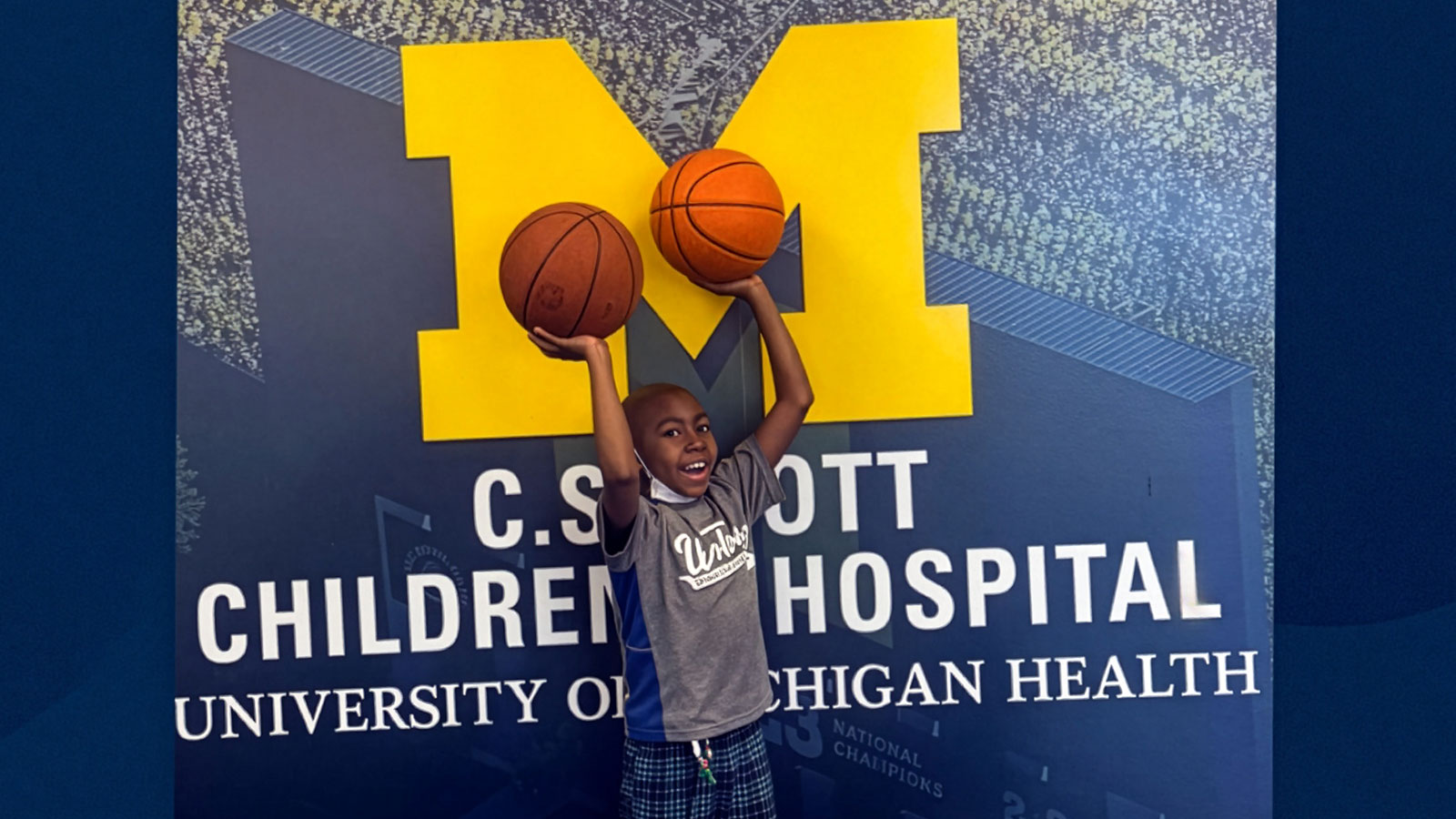
When Elijah did not respond to any of his GvHD treatments, his care team decided to try mesenchymal stem cell therapy that had been approved by the FDA in December 2024.
Mesenchymal stem cells can differentiate into multiple types of cells. They help slow down the immune system to stop GvHD and repair injured tissues.
“We have given mesenchymal stem cells before, as part of compassionate use, and patients respond well,” Abusin said.
“Elijah was the first patient at U‑M who received the treatment after FDA approval.”
Elijah completed his final stem cell therapy in January 2026.
During his treatment, he was also weaned off on the steroids he received.
Elijah inspires others with his story
Throughout his treatment journey, Elijah leaned on his faith and community.
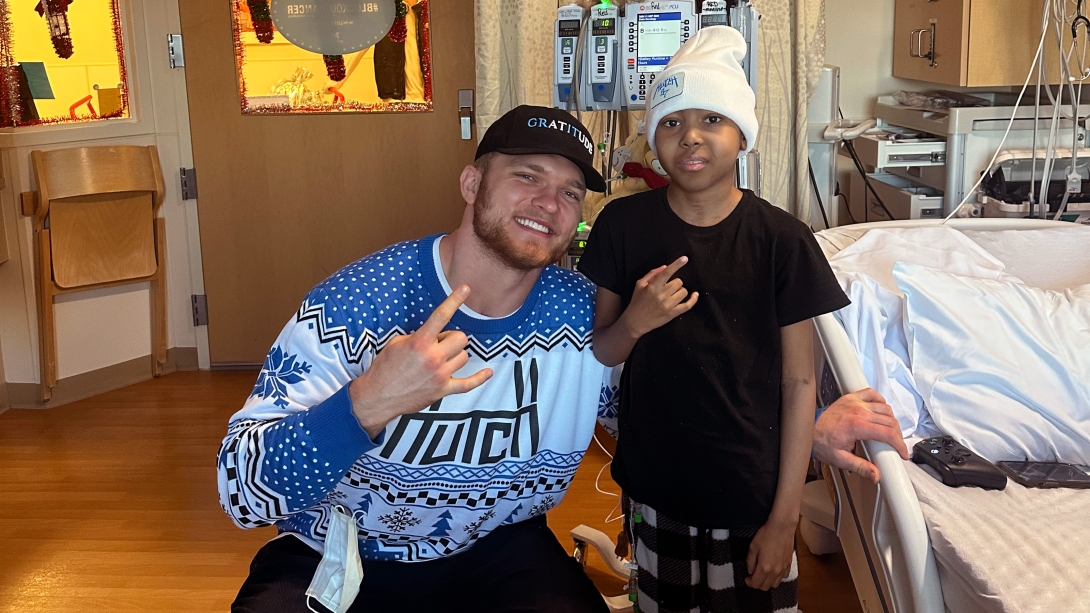
During his stay at Mott, he met Detroit Lions #97 Aidan Hutchinson and was named Hutch’s Hero in December 2025 through Hutchinson’s foundation, House of Hutch.
Hutchinson later attended a Lions vs. Steelers game with Elijah’s mantra “faith over sickle” written across his water jug.
“Elijah was always graceful during his time here, even when it was difficult and frustrating,” Abusin said.
“His family kept their faith and were always optimistic. That made a big difference in his approach to the treatment.”