
By Melina Glusac | Photos by University of Michigan Health
Read time: 5 min
Key takeaways:
- University of Michigan neurosurgeons recently implanted the first-in-human wireless brain-computer interface from Paradromics, Inc.
- The implant recipient will receive continued care at the Stanford Morris ALS Clinic at U‑M Health.
- Gifts from the Stanford Morris Foundation, Scott Pranger, and other donors help the clinic conduct innovative research.
Healthcare has the power to transform lives—and at University of Michigan Health, that includes restoring one of our most vital faculties: speech.
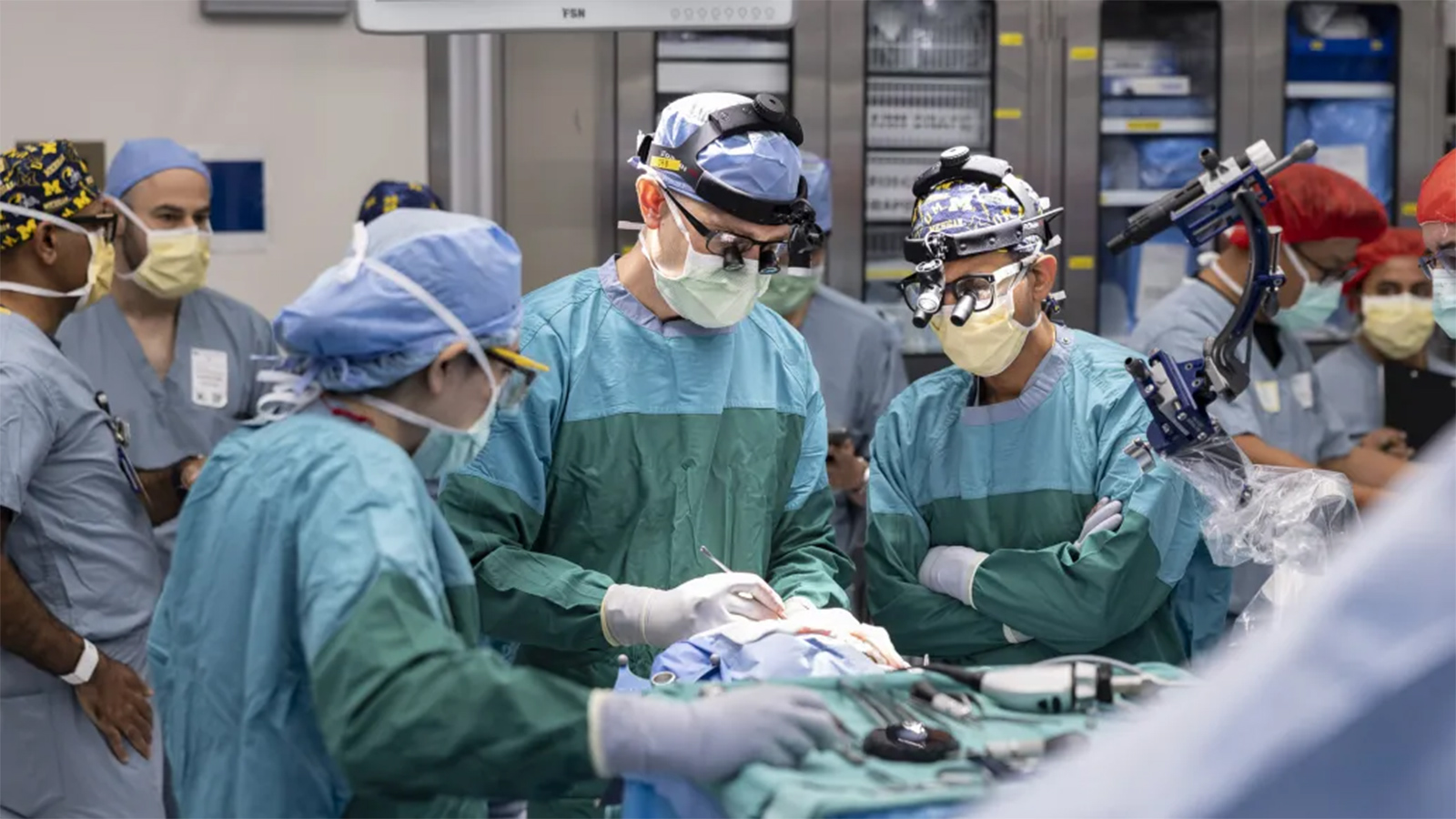
Recently, neurosurgeons at U‑M Health implanted the first-in-human wireless brain-computer interface (BCI) into a patient who has difficulty speaking due to motor neuron disease. The BCI works by understanding brain signals to translate them into action, allowing the patient to communicate through a computer.
This BCI is one of very few wireless devices being tested throughout the country. It’s part of a nationwide clinical trial, which will help monitor the safety and effectiveness of the implant in aiding the patient’s communication. The patient is currently receiving continued motor neuron disease care at the Stanford Morris ALS Clinic at U‑M Health.
Where donor support comes in
ALS (amyotrophic lateral sclerosis) is the most common motor neuron disorder, and it can greatly impact the ability to communicate. That’s why BCIs and research in this area are imperative for progress and healing—and the Stanford Morris ALS Clinic, fueled by philanthropy, is leading that charge.
Dr. Matthew Willsey (PhD ’20, MedRes ’22), one of the neurosurgeons who performed the brain implant surgery and assistant professor of neurosurgery and biomedical engineering at U‑M, said of the clinic:
“This work would not happen without the outstanding ALS clinic here at U‑M. Donor support for the ALS clinic (is) a key enabler for clinical trials, including this one.”
Thanks to a generous gift from the Stanford Morris Foundation, the clinic was named in honor of the late Stanford Morris earlier this year. Morris, who died of ALS, came to U‑M Health for consultation and was inspired by the care he received.
“My dad was one of the most kind and generous people you could ever meet. He established the Stanford Morris Foundation to make a difference in people’s lives,” said Rona Danziger (AB ’91), daughter of Stanford Morris and one of the trustees at The Stanford Morris Foundation. “As he fought this terrible disease, he became passionate about the desperate need to further ALS research and patient care. This gift reflects my dad’s hopes and dreams for ALS care, which are shared deeply by his family.”
The foundation’s gift not only helps over 300 ALS patients receive top-notch, well-rounded care at the clinic every day—it also ensures they have access to the latest treatment options.
“This support helps sustain our clinical research infrastructure, allowing us to bring promising, new clinical trials to our patients,” said Dr. Stephen Goutman (MS ’15).
Goutman, who treated Morris, is the director of the Stanford Morris ALS Clinic, Harriet Hiller Research Professor, and professor in the Department of Neurology.
“Access to innovative research provides hope and creates opportunities for individuals with ALS to participate in the development of future therapies,” Goutman continued. “This commitment to advancing research and expanding treatment options was especially important to Stanford.”
Working together for a brighter future
The Morris ALS clinic is one arm of the Scott Pranger ALS Center at Michigan Medicine, which was endowed by philanthropist Scott Pranger earlier this year. The Pranger ALS Center’s mission is to identify causes, new therapies, and prevention strategies while also providing compassionate treatment for those living with ALS.
Like Stanford Morris, Pranger’s connection to ALS is deeply personal: His late wife, Cathleen, died from ALS and received thoughtful care at Michigan Medicine throughout the disorder’s progression.
“ALS care is inherently complex because it requires an entire team of specialists working together to address the many challenges patients and families face throughout the course of the disease,” Goutman said.
That’s where U‑M’s multidisciplinary model of care excels—and helps patients excel, too. It brings together neurologists, nurses, pulmonologists, respiratory therapists, physical and occupational therapists, rehabilitation engineers, speech-language pathologists, dietitians, social workers, clinical research coordinators, and many others, Goutman said.
This infrastructure is part of a bigger picture, a worldwide quest for a cure. Already, the Pranger ALS Center has identified environmental triggers and new therapies. This past May, ALS became a reportable disease in the state of Michigan, which will lead to new prevention programs.
“This is an extraordinarily exciting period in ALS research,” Goutman said. “Our research and that of others has identified associations between ALS and exposures such as metals, pesticides, and certain occupational and environmental experiences.”
“Advances in gene-targeted therapies are also tremendously exciting,” he continued. “We are already using some of these therapies in the clinic.”
Goutman also believes advances in pulmonary support technologies are helping ALS patients live longer, and new technologies (like BCIs and sophisticated power wheelchairs) are improving patients’ lives.
The brain implant marks a significant stride in the right direction—the direction of independence, restoration, and hope, which is what every gift made to ALS programs at U‑M supports.
“What gives me perhaps the greatest optimism is the unprecedented collaboration across the ALS community: Patients, clinicians, scientists, industry partners, advocacy organizations, and philanthropic supporters are working together with a shared sense of urgency,” Goutman said.
“ALS does not afford us the luxury of moving slowly. The pace of discovery continues to accelerate, and that collective commitment is bringing us closer to better treatments, improved quality of life, and ultimately a future where ALS can be prevented altogether.”
Related Funds
Related Stories

Tags
Related Funds
Brain Bank Discovery Fund - 322807
The Brain Bank collects and shares brain tissues with researchers world-wide who study neurological disease. Your gift he

ALS Patient Care, Research, and Clinical Trials - 336111
Gifts to the Stanford Morris ALS Clinic support amyotrophic lateral sclerosis (ALS) patient care, education, outreach, an
Related Stories
Granger family champions new behavioral health hospital at UM Health-Sparrow
New gift from Granger family champions new behavioral health hospital at UM Health-Sparrow.
Gift to Michigan Medicine will boost women’s health
New professorship and program established in the Michigan Medicine Department of Obstetrics and Gynecology.
Turning research into action
A Q&A with new Michigan Public Health dean Charles Holmes on AI, global health, and the power of philanthropy.

A breath of gratitude
Innovative ECMO treatment saves a young boy’s life—and inspires his philanthropic journey
Vital support
New gift helps offset graduate school loan caps for nursing students